
WHAT IS IPV6?
IPv6 (internet protocol version 6) is a revised protocol for the ID systems used to differentiate computers on a network routing traffic across the Internet. Every computer that communicates over the Internet must carry its own address. Up until 2013, IPv4 had been used, however the world’s supply of IPv4 addresses have been depleted; IPv6 succeeds IPv4 web addresses. To fully understand IPV 6, let’s start with explaining a bit about subnets.

With IPv6, address are now 128 bits long (16 bytes), typically the host portion of this address will be derived from a MAC address or other interface identifier. While IPv4 is still the most widely used, the Internet Engineering Task Force is advising all to use IPv6 because of the foreseeable exhaustion of IPv4. Colocation America offers a vastly larger address space, which derives from their usage of a 128-bit address. This expansion gives the flexibility that allocating address and routing traffic needs, as well as eliminates the need for NAT (network address translation).
What Is a Subnet?
During the early days of the Internet (before it was named the world-wide-web), the US Department of Defense agency developed IPv4 – a quad dotted decimal format to test the limits of its networking capabilities. IPv4 addresses are designated by four subnets of numbers (e.g. 170.16.240.1 which is separated by decimals. However, during the late 1980s, the federal government realized they would run out of IPv4 addresses and something needed to be done. IPv6 connectivity researchers proposed a simple solution: introduce more subnets (eight groups in total) separated by colons to define the IPv6 protocol. For example, an IPv6 address example looks something like this: 1000:0db7:86a4:0043: 2000:8a3f:0470:7445 As you can see, the IPv6 address format looks much more complex than IPV4—and it is, but that’s a good thing. It would take the world until the unforeseeable future to run out of IPv6 addresses. Therefore IPv6 subnetting will start to become as simple looking as its predecessor very soon.
Understanding IPv6: How Do IPv4 and IPv6 Communicate?
Over the Internet, Data is transferred via network packets; however, this is where IPv4 and IPv6 diverge. IPv6 requires a different format in order to transfer network packets. Unfortunately, IPv4 and IPv6 addresses cannot transmit data to each other directly; they require another gateway to communicate. Fortunately, IPv6 addresses can efficiency route data across the Internet due in part to the increase of subnets or decimal place-holders representing numerical values. A situation where an IPv4 device would have to communicate to an IPv6 device would be rare, but only possible through the means of a 3rd party proxy, otherwise it would be impossible. Most websites, however are accessible through either IPv4 or IPv6 (since IPv6 is so voluminous, there’s really no problem in giving devices and websites both).What Are the IPv6 Advantages
- Increased Capacity: of address space—resources are efficiently allocated to accommodate additional web addresses.
- Efficient Routing: allows for easy aggregation of prefixes assigned to IP networks.
- Efficient Data Flow: enables large data packets to be sent simultaneously helping to conserve bandwidth.
- Security: is improved due in part to improved authentication methods built into network firewalls.
What Are the Disadvantages of IPv6?
- Conversion: IPv4 is still widely used and the world is slow to convert to IPv6.
- Communication: IPv4 and IPv6 machines cannot communicate directly to each other, in the very rare circumstance that they would need to.
- Transition: The process of making the switch to IPv6 from IPv4 is slow and tedious.
- Readability: Understanding IPv6 subnetting can be difficult on its own, let alone trying to remember/memorize your IPv6 address.
Who Is Making the Switch to IPv6 Address Format?
In 2013, many Internet companies, such as Google, Amazon and Yahoo, temporarily switched to using IPv6 network protocols simply to test the waters. The test proved to be a success for most; then everyone switched back to using IPv4. Currently, most – if not all major websites have not yet added IPv6 connectivity to their respective networks. Moving into the future, the majority of websites running IPv4 protocols will need to implement transition gateways to bridge the gap between IPv4 and Ipv6 protocols.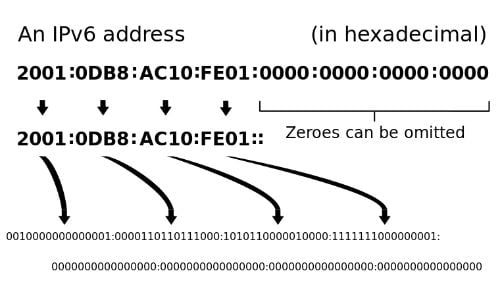
Why Upgrade to IPv6 IP Address?
Transitioning to IPv6 is a very significant event in the history of the Internet. Moreover, the push to upgrade to IPv6 connectivity will intensify—and those who do not upgrade will be stuck in slower communication mediums. In other words, websites engineered to run on IPv6 connectivity will be forced to go through another gateway just to communicate with a business or household stuck on IPv4 connectivity. IPv6 protocols have officially debuted and represent the next generation of networking protocols. As previously stated, the world has depleted its supply of IPv4 addresses. The world is quickly evolving to offer Internet connectivity through various devices apart from computers and mobile phones. More IPv6 web addresses will need to be allocated to accommodate growth in the coming years. Perhaps the only downside is that IPv4 and IPv6 networking protocols will have trouble communicating with one another, but companies and researchers are still coming up with ways to “wrap” IPv4 packet data in IPv6 format, if only to bridge the gap between these two communication channels.How IPv6 Supports the Growth of the Internet
The Internet Protocol (IP) is one of the pillars in support of the Internet, which has been around for almost 25 years. It originated as a concise set of 45 pages in RFC 791 and acts as the network-layer protocol for the Internet. In 1991 the IETF determined that the IPv4 had outgrown its design and moved to develop the next thing. After much research, the IETF released a clear direction and IPv6 started to be formed in 1994. It is now described in the Internet standard document RFC 2460, published in December 1998. As of 1994, over 30 IPv6 RFCs have been published. The most impactful change from IPv4 to IPv6 is the actual address. IPv4 had a 32 bit long (4 bytes) address, which is composed of a network and host portions. With IPv6, address are now 128 bits long (16 bytes), typically the host portion of this address will be derived from a MAC address or other interface identifier. While IPv4 is still the most widely used, the Internet Engineering Task Force is advising all to use IPv6 because of the foreseeable exhaustion of IPv4. Colocation America offers a vastly larger address space, which derives from their usage of a 128-bit address. This expansion gives the flexibility that allocating address and routing traffic needs, as well as eliminates the need for NAT (network address translation).
 Wait, Whatever Happened to IPv5?
Many of you are probably wondering why the people who decide these things decided to skip over IPv5. Well, as you might incur, IPv5 would eventually run into the same running-out-of-numbers problem as IPv4. Therefore it was decided to just go with the outrageous amount of IPv6 numbers so that humanity would never have to worry about running out of IP addresses again. For a more in depth look at the reasoning behind skipping from IPv4 to IPv6, check out our blog on the matter.IPv6 Colocation CIDR Subnet Chart
| IPv6 CIDR Subnet | Number of IPs |
|---|---|
| /128 | 1 |
| /127 | 2 |
| /126 | 4 |
| /125 | 8 |
| /124 | 16 |
| /123 | 32 |
| /122 | 64 |
| /121 | 128 |
| /120 | 256 |
| /119 | 512 |
| /118 | 1,024 |
| /117 | 2,048 |
| /116 | 4,096 |
| /115 | 8,192 |
| /114 | 16,384 |
| /113 | 32,768 |
| /112 | 65,536 |
| /111 | 131,072 |
| /110 | 262,144 |
| /109 | 524,288 |
| /108 | 1,048,576 |
| /107 | 2,097,152 |
| /106 | 4,194,304 |
| /105 | 8,388,608 |
| /104 | 16,777,216 |
| /103 | 33,554,432 |
| /102 | 67,108,864 |
| /101 | 134,217,728 |
| /100 | 268,435,456 |
| /99 | 536,870,912 |
| /98 | 1,073,741,824 |
| /97 | 2,147,483,648 |
| /96 | 4,294,967,296 |
| /95 | 8,589,934,592 |
| /94 | 17,179,869,184 |
| /93 | 34,359,738,368 |
| /92 | 68,719,476,736 |
| /91 | 137,438,953,472 |
| /90 | 274,877,906,944 |
| /89 | 549,755,813,888 |
| /88 | 1,099,511,627,776 |
| /87 | 2,199,023,255,552 |
| /86 | 4,398,046,511,104 |
| /85 | 8,796,093,022,208 |
| /84 | 17,592,186,044,416 |
| /83 | 35,184,372,088,832 |
| /82 | 70,368,744,177,664 |
| /81 | 140,737,488,355,328 |
| /80 | 281,474,976,710,656 |
| /79 | 562,949,953,421,312 |
| /78 | 1,125,899,906,842,620 |
| /77 | 2,251,799,813,685,240 |
| /76 | 4,503,599,627,370,490 |
| /75 | 9,007,199,254,740,990 |
| /74 | 18,014,398,509,481,900 |
| /73 | 36,028,797,018,963,900 |
| /72 | 72,057,594,037,927,900 |
| /71 | 144,115,188,075,855,000 |
| /70 | 288,230,376,151,711,000 |
| /69 | 576,460,752,303,423,000 |
| /68 | 1,152,921,504,606,840,000 |
| /67 | 2,305,843,009,213,690,000 |
| /66 | 4,611,686,018,427,380,000 |
| /65 | 9,223,372,036,854,770,000 |
| Residential – /64 | 18,446,744,073,709,500,000 |
| /63 | 36,893,488,147,419,100,000 |
| /62 | 73,786,976,294,838,200,000 |
| /61 | 147,573,952,589,676,000,000 |
| /60 | 295,147,905,179,352,000,000 |
| /59 | 590,295,810,358,705,000,000 |
| /58 | 1,180,591,620,717,410,000,000 |
| /57 | 2,361,183,241,434,820,000,000 |
| /56 | 4,722,366,482,869,640,000,000 |
| /55 | 9,444,732,965,739,290,000,000 |
| /54 | 18,889,465,931,478,500,000,000 |
| /53 | 37,778,931,862,957,100,000,000 |
| /52 | 75,557,863,725,914,300,000,000 |
| /51 | 151,115,727,451,828,000,000,000 |
| /50 | 302,231,454,903,657,000,000,000 |
| /49 | 604,462,909,807,314,000,000,000 |
| Business – /48 | 1,208,925,819,614,620,000,000,000 |
| /47 | 2,417,851,639,229,250,000,000,000 |
| /46 | 4,835,703,278,458,510,000,000,000 |
| /45 | 9,671,406,556,917,030,000,000,000 |
| /44 | 19,342,813,113,834,000,000,000,000 |
| /43 | 38,685,626,227,668,100,000,000,000 |
| /42 | 77,371,252,455,336,200,000,000,000 |
| /41 | 154,742,504,910,672,000,000,000,000 |
| /40 | 309,485,009,821,345,000,000,000,000 |
| /39 | 618,970,019,642,690,000,000,000,000 |
| /38 | 1,237,940,039,285,380,000,000,000,000 |
| /37 | 2,475,880,078,570,760,000,000,000,000 |
| /36 | 4,951,760,157,141,520,000,000,000,000 |
| /35 | 9,903,520,314,283,040,000,000,000,000 |
| /34 | 19,807,040,628,566,000,000,000,000,000 |
| /33 | 39,614,081,257,132,100,000,000,000,000 |
| ISP – /32 | 79,228,162,514,264,300,000,000,000,000 |
| /31 | 158,456,325,028,528,000,000,000,000,000 |
| /30 | 316,912,650,057,057,000,000,000,000,000 |
| /29 | 633,825,300,114,114,000,000,000,000,000 |
| /28 | 1,267,650,600,228,220,000,000,000,000,000 |
| /27 | 2,535,301,200,456,450,000,000,000,000,000 |
| /26 | 5,070,602,400,912,910,000,000,000,000,000 |
| /25 | 10,141,204,801,825,800,000,000,000,000,000 |
| /24 | 20,282,409,603,651,600,000,000,000,000,000 |
| /23 | 40,564,819,207,303,300,000,000,000,000,000 |
| /22 | 81,129,638,414,606,600,000,000,000,000,000 |
| /21 | 162,259,276,829,213,000,000,000,000,000,000 |
| /20 | 324,518,553,658,426,000,000,000,000,000,000 |
| /19 | 649,037,107,316,853,000,000,000,000,000,000 |
| /18 | 1,298,074,214,633,700,000,000,000,000,000,000 |
| /17 | 2,596,148,429,267,410,000,000,000,000,000,000 |
| /16 | 5,192,296,858,534,820,000,000,000,000,000,000 |
| /15 | 10,384,593,717,069,600,000,000,000,000,000,000 |
| /14 | 20,769,187,434,139,300,000,000,000,000,000,000 |
| /13 | 41,538,374,868,278,600,000,000,000,000,000,000 |
| /12 | 83,076,749,736,557,200,000,000,000,000,000,000 |
| /11 | 166,153,499,473,114,000,000,000,000,000,000,000 |
| /10 | 332,306,998,946,228,000,000,000,000,000,000,000 |
| /9 | 664,613,997,892,457,000,000,000,000,000,000,000 |
| /8 | 1,329,227,995,784,910,000,000,000,000,000,000,000 |